

Starting Solids & Food Allergies: What Parents Really Want to Know
Written by Dr. Taylor Lin, Pediatric Allergist & Advisor at Bébé Foodie

Many parents feel confident starting solids… until it’s time to introduce peanut or egg. Suddenly feeding your baby can feel a little intimidating, especially with so much information (and fear) online. As a board certified pediatrician and allergist, I help families of all risk levels navigate feeding their little ones. My goal is to help families feel informed and in control, even as new foods are introduced. Today I’d like to share some frequently asked questions so you too can feel informed about food allergies in young children and feel ready to move onto baby’s next course!
Pediatric Food Allergy FAQ
Starting Solids & Introducing Allergens
(For parents introducing allergens for the first time and feeling nervous about reactions)
1. Which allergens should I know before starting solids?
Although any food can cause an allergy, the majority of pediatric food allergies are caused by the “top 9” foods, including:
-
Milk
-
Egg
-
Wheat
-
Soy
-
Peanut
-
Tree nuts (e.g., almond, cashew, pistachio, walnut, pecan)
-
Fish
-
Shellfish
-
Sesame

2. Is my baby really at risk for food allergies? How common are they?
Approximately 1 in 13 children has one or more food allergies in the US, which is nearly 8%. Certain children are at higher risk for food allergies including children with moderate-severe eczema, other allergies, wheezing, or family history of allergic disorders like asthma, eczema or food allergies. There are children who develop food allergies who do not have any of these risk factors. Having eczema does not mean your baby will automatically develop food allergies, but it may mean you’ll want to discuss allergen introduction timing with your pediatrician.
3. When should I introduce allergens to my baby?
Allergens should be introduced starting at 6 months, around the same time as complementary foods in general.
4. Can I introduce several new foods at once?
The old ‘wait 3 days between every food’ advice still circulates a lot online and often makes starting solids feel much more stressful than it needs to be. So let’s be clear, it is not necessary to try every new food for 3 days before trying something else. Most foods are very low risk for food allergy, so trying a new low risk food every day is best. Low risk foods include fruits, vegetables, and grains other than wheat. When introducing allergens, you should try only one for about 2-3 days, while continuing other complementary foods your infant already tolerates. That allows you to offer the new allergen 3-4 times and be able to clearly identify if your baby is tolerating it before trying another allergen.
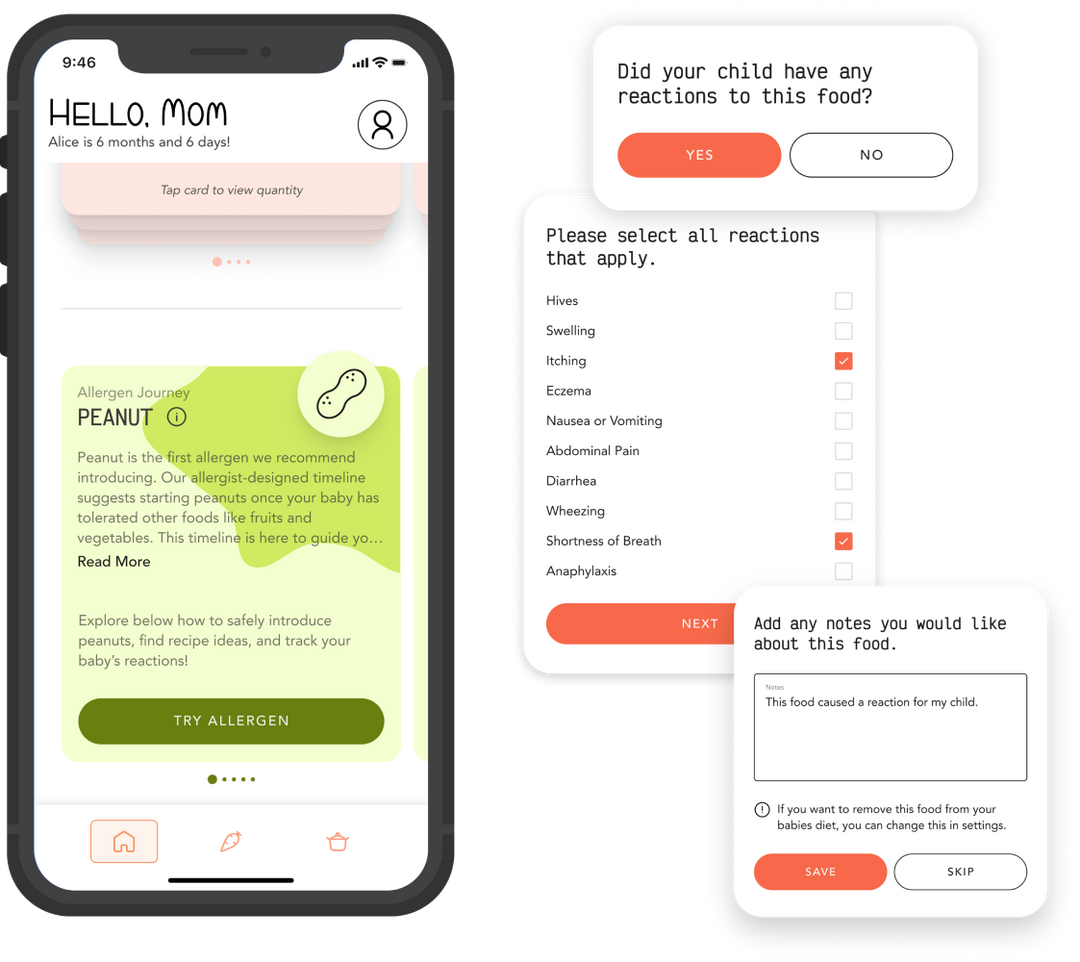
Check out the Bébé Foodie app for allergens introduction schedule and tips!
5. What is a food allergy?
A food allergy happens when the immune system mistakenly identifies a food protein as harmful and reacts to it. Reactions can range from mild symptoms like hives or vomiting to more serious symptoms involving breathing or multiple body systems. Food allergy reactions typically happen soon after eating the food, though some symptoms can appear a few hours later.
6. Can early introduction of allergenic foods help prevent food allergies?
We may be able to prevent the development of some food allergies by feeding infants the allergen earlier rather than later. Early introduction of allergenic foods, especially peanut, during infancy has been shown to reduce the risk of developing food allergy. The medical evidence for this is strongest for peanut, but may also help prevent egg and tree nut allergies. If your child is at higher risk for food allergies, including with eczema or other food allergies, you should discuss early introduction of peanut with your pediatrician or allergist first. They may recommend testing or trying peanut for the first time in the allergist’s office.

7. Why does it seem as so many kids have food allergies now?
It’s complicated, and the short answer is we still do not know. We know there are some underlying genetic risk factors, but there are likely changes in our environment and the way we live that are affecting food allergy rates. Something we most clearly understand is that when certain food proteins (e.g. peanut protein) come in contact with abnormal skin (eczema), the immune system marks peanut as dangerous and is a risk factor for developing the food allergy. However, this isn’t the whole story. Other factors that likely play a role in food allergy trends are reduction of microbiome diversity from general increased cleanliness in modern times and dietary changes driven by our food systems. More to come on this. The sooner we understand why children become allergic to foods the closer we’ll be to a cure!
I Suspect My Baby Has a Food Allergy, Now What?
(For parents navigating life after a reaction or diagnosis)
1. How will I know if my child is having an allergic reaction?
The hallmark of an allergic reaction is rapid onset of symptoms; your infant is happily feeding one moment and the next minute things have changed - maybe a rash, irritability, coughing, vomiting, or scratching. Reactions most commonly occur within minutes of eating, but can occur up to 2-4 hours later.
An allergic reaction may only present as a rash, other times many symptoms occur at once.
Signs of an allergic reaction in babies may include:
Skin symptoms
-
hives (raised welts)
-
swelling
-
redness
Gastrointestinal symptoms
-
vomiting
-
diarrhea
-
abdominal pain
-
irritability
-
gagging
Respiratory symptoms
-
coughing
-
wheezing
-
noisy breathing
Cardiovascular symptoms
-
pale appearance
-
tired
-
not responding
Anaphylaxis is a severe, life-threatening reaction involving multiple body systems and requires immediate treatment. Call 911 immediately if you think your child is having a severe allergic reaction.
Check out my blog post Spotting Food Allergies in Babies: Symptoms and Signs Explained by a Pediatric Allergist for more detailed information on identifying allergic reactions.

2. What should I do after my baby has an allergic reaction?
You should seek medical care right away after a reaction. Treat with an antihistamine (e.g. Zyrtec, Benadryl) if you have it. If the reaction is severe, you need to call 911.
In the near term, you should not give your baby any of the foods they may have reacted to. Speak to your pediatrician or allergist to make a plan before giving those foods again. They will likely recommend some further testing and evaluation.
3. How is a food allergy diagnosed?
Diagnosis is based on a combination of:
-
Detailed medical history
-
Skin prick testing and/or blood tests (specific IgE levels)
-
Sometimes an oral food challenge (performed under medical supervision by a food allergist)
Ask your pediatrician for a referral to a pediatric allergist if you suspect a food allergy.
4. Should I avoid introducing other allergens now that my baby reacted to one?
Not necessary. Most children are only allergic to one food, however my advice is to discuss your child’s food allergy with their pediatrician and/or allergist. They can identify if there are higher risk foods for your child going forward. For example, having a peanut allergy is a risk factor for being allergic to tree nuts, so they may recommend more screening testing before you try tree nuts at home.
5. Do I need to remove the allergen from my whole house?
No, but you will need to make some adjustments. After diagnosis, I recommend parents go home and check the labels on everything in the home. Foods containing the food allergen (e.g. peanut) should be put up in a high cabinet - think where you’d put medications to be inaccessible to children. The child should not have access to foods that contain their allergen. Label these foods clearly, so other visitors or caregivers can quickly identify the foods as unsafe.
For non-allergic persons living in the home, they may eat the allergen but should eat away from the child, wash their hands with soap and water after eating, and brush their teeth. Any dishes, cutting boards, or other dishware used to prepare the food containing the allergen should be washed in the dishwasher before being used for the child. Surfaces should be washed thoroughly with soap and water.
6. Are there treatments available for food allergy?
Yes, treatment options are evolving. Oral immunotherapy (OIT) is one approach that gradually increases tolerance to certain foods like peanut under medical supervision. While not a cure, it can reduce the risk of severe reactions from accidental exposures. There is also an injectable medication called omalizumab that helps protect young children and adults from severe reactions to their food allergens if accidentally ingested.

Final thoughts
In summary, food allergies are generally rare, with only about 8% of children suffering from them. However, it is important to be aware of signs of food allergy when you’re feeding your child so you can respond quickly and appropriately. Finally, if you suspect your child is allergic to a food, speak to your pediatrician or allergist about a path forward. There are treatment approaches to help minimize your child’s risk of ever having a reaction again.
Introducing allergens can feel intimidating at first, especially with so much information online. But most families gradually become much more confident with time, practice, and support. To provide extra support during solids introduction, I created a timeline to introduce all top allergens by the time your baby turns one that you can find on the Bébé Foodie App. You got this, and we got you!

Written by Dr. Taylor Lin
Pediatric Allergist & Advisor at Bébé Foodie
Meet Dr. Taylor Lin, our go-to expert on allergies and immunology! Dr. Lin serves families in southeast Michigan as an allergy and immunology physician with Allergy & Immunology Associates. With top-notch training from the University of Michigan and a specialty fellowship in pediatric food allergy, she’s not just highly qualified—she’s also a mom to a child with food allergies herself! Dr. Lin directs her clinic's food oral immunotherapy program and brings evidence-based, accessible advice to families through her role with Bébé Foodie.
This blog post is for information purposes only and shouldn’t be used as personal, health, nutritional, or medical advice. Always consult with your pediatrician before making any decisions about your child's health or readiness for various foods.
Popular Posts



Share this
Want extra support when introducing allergens?
Allergen guidance created by a pediatric allergist at your fingertips in the Bébé Foodie App.
🥜 Top allergens explained clearly
⏱ Timing guidance for allergen introduction
✔️ Easy tracking for allergens tried
⚠️ Track symptoms and make notes
Leave a comment