

Family Meals for Babies and Toddlers: A French-Inspired Approach to Dinner

If you were to ask a room full of parents what dinner looks like with a baby, I can bet that most of them would describe two shifts: a first meal for baby at 5 p.m., then the “real” dinner once the baby is asleep.
Let’s be honest for a minute: family dinner every night, with everyone at the table at 7 p.m., isn’t real life for most families with a baby. Babies eat early. Toddlers get tired. Sometimes one parent is still at work, and the other is eating standing up over the sink.
Our approach at Bébé Foodie has never been to force a nightly sit-down dinner. It’s simpler than that: when it makes sense, share the food you’re already cooking with your baby, and when the timing works, enjoy it together. The two don’t have to go hand in hand, and neither needs to happen every day.
I’ll set aside a bit of tonight’s vegetables before seasoning, save some of yesterday’s lentils, or mash some of the sweet potatoes I roasted for us. And when the chance comes up to eat together, on a weekend or a slow evening, we do! And on days where it’s take out pizza and a glass of wine? Baby gets a food pouch, as simple as that.
That’s the French influence here. It’s not about rules or a perfect table. It’s about creating a fun and relaxed environment around food, introducing babies to the flavors of the family kitchen, and enjoying meals together when we can. Nobody needs to stress about every meal looking like a magazine spread. It’s about finding a balance that works for your family, whether you’re in France or anywhere else.
The good news is that starting solids doesn’t have to mean cooking a second dinner. With a few simple adjustments, many of your favorite family meals can work for your baby, too. Below you'll find easy baby-led weaning dinner ideas and practical ways to make one meal work for everyone, whenever and however you end up eating it.
Why family meals matter for babies and toddlers | Lucie, the founder of Bébé Foodie

Babies learn to eat by watching you
Your baby is studying you long before they eat much themselves. Watching you chew, taste, make a face at something sour and go back for more is how they learn that food is something to explore. When baby sees you eating, it can give them an example to follow without you having to “teach” anything.
Your family's flavors become their first foods
In France, common first foods include leeks, turnips, parsnips, zucchini, fresh herbs and a little bit of cheese, because that’s what’s on the family table. Yours might grow up with cumin, ginger, black beans or Grandma’s chicken soup, and that’s exactly the point! Sharing meals introduces babies to your food culture, whatever it looks like.
Does your baby need to eat dinner with the family every night?
In France, when it’s time to eat, you’ll almost always hear someone yell “À table !” (“To the table!”). It might be a parent, a sibling, or a grandmother from the kitchen. It’s a small daily ritual in pretty much every French home, and it means: stop what you’re doing, come sit down, and let’s eat together.
What really matters is that the meal is as much about connection as it is about nutrition. The point is to enjoy it: sit down, put the screens away, share the food, even if it’s only for 15 minutes.
With a baby, these little moments of connection can happen at any time of day. When your baby is the only one eating, grab a little something for yourself and eat with them. Talk, laugh, and show them how you take a bite. You’re their favorite example.
And if they’ve already eaten before the rest of the family and it’s not time for a nap or bed yet, bring them to the table anyway. A few soft bites from your plate, or just a spoon to play with, and they get to be part of the meal too.
When can babies start eating family meals?
Once your baby is developmentally ready to start solids, usually around 6 months, they can begin enjoying many of the same foods you're already cooking for your family. A few simple adjustments to texture, shape, and seasoning can make your everyday family meals baby-friendly, without having to start from scratch.
Does your baby need to eat everything the family eats?
Babies don’t need to eat everything the family eats, or even much of it. Some nights it’s three bites and a lot of floor. Other nights they’ll surprise you and eat half your lentils. Both are normal.

6 French-inspired habits for easier family meals
-
Cook once, serve twice. Set aside a baby portion before adding salt or spicy sauce, or keep some leftovers for tomorrow’s lunch. Same food at a different time still counts as sharing the meal.
-
Serve vegetables first. In France, the entrée (starter) is often a vegetable or a soup, served when everyone is hungriest. While you finish cooking, put out soft roasted carrot sticks or cucumber slices for baby,
-
Make soup a weeknight hero. Blend part of it smooth for baby and leave it chunky for everyone else. One pot, everyone eats, done.
-
Try a goûter for toddlers. The French afternoon snack, around 4 p.m., keeps little ones from arriving at dinner starving, which tends to make them pickier.
-
Keep a few easy backups. A pouch, plain yogurt, a ripe banana. On pizza-and-wine nights, store-bought counts too. Balance means no guilt.
-
“On goûte,” no pressure. In my house, the invitation is to taste, not to finish. No counting bites, no bribes, no commentary on how much was eaten.
Want to dive deeper? We’ve written more about why family meals matter, and when they don’t.
So, on the nights when you do want to cook one meal that works for everyone, what does that actually look like? We asked Bébé Foodie chef Whitney to share some of her favorite baby-friendly family meals, from simple weeknight dinners to a Greek chicken bowl everyone can customize. Whether your baby eats alongside you or enjoys a little of the same food earlier in the evening, these ideas can help make dinner a little easier.
4 easy family dinner ideas for babies and toddlers | Whitney, chef & advisor at Bébé Foodie

The good news? You don’t need to cook French food to eat the French way. The approach works with whatever your family already loves, whether that’s tacos, pasta or a Tuesday night stir-fry. Here are a few simple family meals you can adapt for your baby or toddler, without having to plan an entirely separate menu.
Like so many parents, I spent years trying to find meals everyone would love. But with different preferences and picky eaters at the table, that one magical dinner everyone agreed on rarely existed!
Eventually, I started serving meals family-style, offering a variety of ingredients that everyone could enjoy in their own way. It gave my kids more independence, took the pressure off me, and encouraged them to explore new foods without feeling forced. That shift in our approach to mealtimes even helped inspire me to start my own children's cooking school.
The good news? You don’t need to cook French food to eat the French way. The approach works with whatever your family already loves, whether that’s tacos, pasta or a Tuesday night stir-fry. Here are a few simple family meals everyone can enjoy.

1. Taco night: one meal, so many ways to enjoy it
Taco night is one of my favorite family-style meals because everyone can enjoy the same ingredients in their own way. Set out seasoned ground turkey or beef, rice, black beans, roasted peppers and onions, soft tortillas, avocado, and shredded cheese, and let everyone build their own plate.
-
For babies: Offer soft, moist ground meat with mild seasonings, mashed beans, ripe avocado, and tender roasted vegetables. Adapt rice and tortillas to your baby's eating abilities.
-
For toddlers and older kids: Let them build their own tacos or enjoy the ingredients separately. Sometimes a little rice, cheese, and avocado is all they want!
2. Pasta night: a baby-led weaning dinner the whole family can enjoy
A simple, comforting dinner that's easy to customize. Serve pasta with tender meatballs, marinara sauce, cooked vegetables, and Parmesan cheese.
-
For babies: Offer soft pasta, appropriately prepared meatballs, and vegetables cooked until easily mashed. Choose a lower-sodium sauce.
-
For toddlers and older kids: Let them enjoy everything mixed together or separately, with sauce on the side for dipping.
3. Stir-fry night: a simple, baby-friendly family meal
A great way to use whatever's in the fridge! Combine chicken, beef, shrimp, or tofu with vegetables like broccoli, carrots, zucchini, and bell peppers. Serve over rice or noodles.
-
For babies: Set aside portions before adding high-sodium sauces. Offer tender proteins, very soft vegetables, and appropriately prepared rice or noodles.
-
For toddlers and older kids: Let them build their own bowls, keeping ingredients and sauces separate if they prefer.
4. Breakfast for dinner: because easy meals count too
Some nights, breakfast is the easiest dinner! Serve pancakes, scrambled eggs, roasted potatoes, avocado, and fruit for a fun, family-style meal.
-
For babies: Offer soft pancakes without added sugar, fully cooked eggs, and age-appropriate fruits and vegetables. Skip typical breakfast sausages, which are often high in sodium and can pose choking hazards.
-
For toddlers and older kids: Let everyone choose their favorites, whether that's pancakes and eggs or a little bit of everything.

Family-style Greek chicken bowls: one meal for everyone
Inspired by the idea of bringing everyone together around one shared meal, these Greek Chicken Bowls are a perfect example of how family-style dining can work in everyday life.
With tender chicken, roasted vegetables, rice, chickpeas, and a creamy yogurt-dill sauce, this meal offers a variety of flavors, textures, and nutrients for the whole family.
What I love most is that everyone can enjoy the same ingredients in a way that works for them. Adults might pile everything into a bowl with feta, olives, and hummus, while toddlers may prefer their ingredients served separately. Babies can explore many of those same foods with simple adjustments to texture and preparation.
It's one meal that can work for the whole family, without the pressure of making everyone's plate look exactly alike or getting everyone to the table at the same time.
Prep time: 15 minutes
Cook time: 25–30 minutes
Servings: 4–6
Ingredients
For the chicken and roasted vegetables
-
2 lbs boneless, skinless chicken breasts
-
1–2 bell peppers, sliced
-
1 red onion, sliced
-
1 (15 oz) can chickpeas, drained and rinsed (preferably no-salt-added)
-
2 tablespoons olive oil, divided
-
1/2 teaspoon garlic powder
-
1/2 teaspoon dried oregano
-
Salt and pepper to taste for older children and adults
For the bowls
-
Cooked rice or quinoa (approximately 1/2 cup cooked per person)
-
1 cucumber, chopped
-
1 cup cherry tomatoes, chopped
-
Pita bread or naan
-
Hummus
-
Crumbled feta cheese
-
Pitted Kalamata olives (optional, for older children and adults)
For the yogurt-dill sauce
-
1/2 cup plain Greek yogurt
-
1 tablespoon dried dill
-
Juice from 1/2 lemon
-
1/2 teaspoon garlic powder
-
Salt and pepper to taste for older children and adults
-
Water, as needed, to thin the sauce
How to make family-style Greek chicken bowls
-
Preheat the oven: Preheat your oven to 425°F (220°C). Line two baking sheets with parchment paper.
-
Prepare the rice or quinoa: Cook according to package instructions. I love using an Instant Pot for this because I can set it and forget it while preparing everything else. Microwaveable rice is another great time-saving option!
-
Season the chicken: Place the chicken on one baking sheet. Drizzle with approximately 1 tablespoon olive oil and sprinkle with garlic powder and oregano. For babies, avoid adding salt to their portion. Bake for approximately 20–25 minutes, depending on thickness, until the chicken reaches an internal temperature of 165°F (74°C). Allow to rest before slicing.
-
Roast the vegetables: Toss the sliced peppers and onions with the remaining olive oil and a little garlic powder and oregano. Spread on the second baking sheet. Roast for approximately 20 minutes, or until tender. For babies, continue cooking their portion if needed until the vegetables are soft enough to mash easily.
-
Prepare the chickpeas: Toss the drained and rinsed chickpeas with a little olive oil and optional oregano. Roast alongside the vegetables until warmed through. For babies, reserve some chickpeas before roasting, warm them separately, and mash or flatten thoroughly before serving.
-
Make the yogurt-dill sauce: Combine the Greek yogurt, dried dill, lemon juice, and garlic powder in a small bowl. Stir until smooth, adding a little water if needed. Set aside a portion without added salt for babies before seasoning the remaining sauce to taste.
-
Prepare the toppings: Chop the cucumbers and tomatoes, crumble the feta, and arrange the hummus, olives, and pita bread in serving bowls.
-
Serve family-style: Place the chicken, rice or quinoa, roasted vegetables, chickpeas, sauces, and toppings on the table. Let everyone assemble their own bowl or plate using the ingredients they enjoy.

How to adapt Greek chicken bowls for babies, toddlers, and older kids
For babies starting solids (6 months+)
Many of the ingredients in these bowls can be adapted for babies beginning solids.
-
Chicken: Offer tender, moist chicken in a developmentally appropriate form. Finely shredded chicken mixed with a little yogurt sauce can help prevent dryness.
-
Rice or quinoa: Cook until soft and moist. Mix with mashed vegetables or yogurt if needed to help your baby manage the texture.
-
Roasted vegetables: Cook peppers and onions until very soft. Remove tough skins if necessary and serve in an age-appropriate shape.
-
Chickpeas: Mash or flatten thoroughly. Never serve whole chickpeas to babies.
-
Yogurt-dill sauce: Offer a small amount made with plain, pasteurized yogurt and without added salt.
-
Toppings: Skip whole olives, raw hard vegetables, and firm cheese crumbles. Raw tomatoes and cucumbers require careful, age-appropriate preparation.
For toddlers learning to eat independently
Let toddlers build their own bowls or serve the ingredients separately on a divided plate. Offer small portions of chicken, rice, roasted vegetables, and mashed or flattened chickpeas.
Sauces can be served on the side for dipping, which is always a fun way to encourage food exploration!
Continue to modify foods that pose choking risks, including olives, cherry tomatoes, and firm raw vegetables.
For adults and older kids
Pile everything into a bowl and finish with feta, olives, hummus, yogurt-dill sauce, and warm pita bread.
You can also add fresh herbs, extra lemon juice, or your favorite seasonings for additional flavor.

How to cook one meal for the whole family (without the extra work)
-
Prep ahead: Cook grains, chop vegetables, or prepare a sauce earlier in the day to make dinnertime easier.
-
Get kids involved: Even little ones can help with age-appropriate tasks like rinsing vegetables, stirring sauces, or setting the table. It's a great way to build confidence and curiosity around food.
-
Make extra: Double up on ingredients like chicken, rice, or roasted vegetables to turn tonight's dinner into tomorrow's easy lunch.
-
Keep a few shortcuts handy: Frozen vegetables, canned beans, microwaveable rice, and prepared sauces can help you get dinner on the table without starting from scratch.
The goal isn't for everyone to have an identical plate. It's to make one meal that brings everyone together while giving each family member the flexibility to enjoy it in their own way.
A little French inspiration, a lot less mealtime pressure
If there's one thing we'd love for you to take away, it's that sharing food with your baby doesn't have to be a big production. Some nights it's a homemade meal, other nights it's a pouch while the rest of the family eats pizza. Both are perfectly fine.
What matters is giving your baby opportunities to explore food, experience your family's flavors, and enjoy those little moments around the table, whenever they happen.
So start simple, go easy on yourself, and as we say at home: bon appétit, et à table!
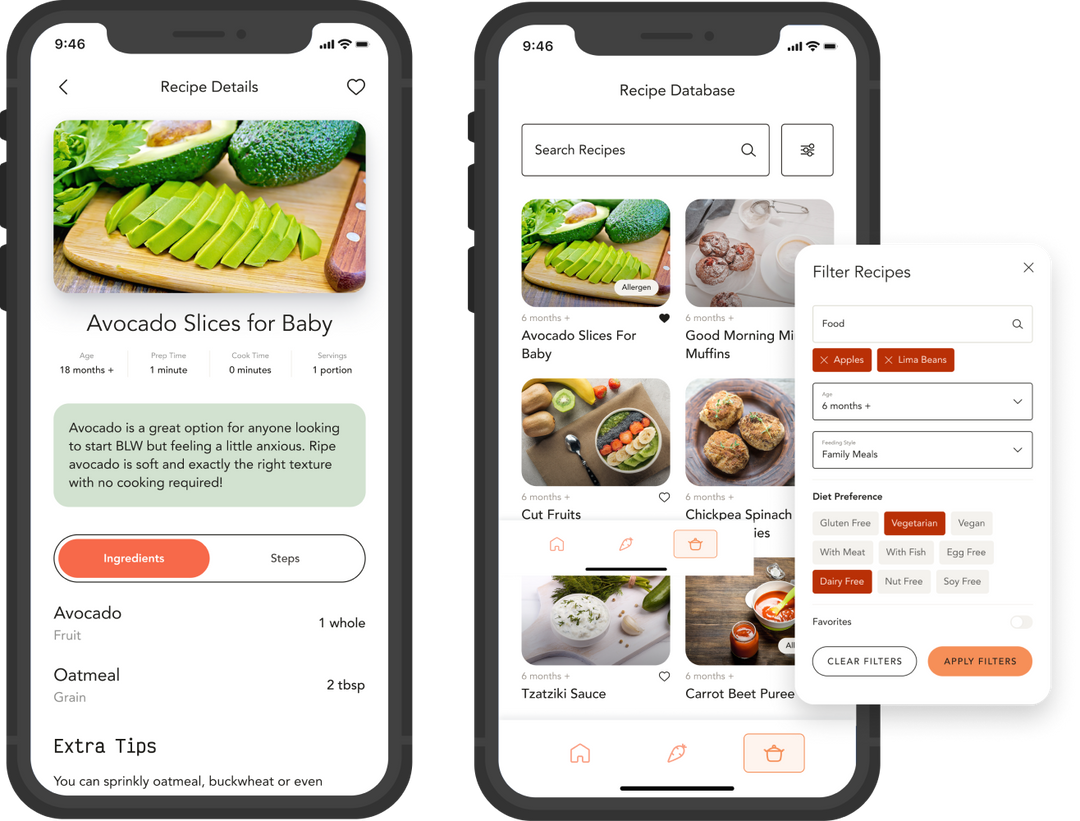
Need a little help making family meals work for your baby? The Bébé Foodie app has age-appropriate serving guides, family-friendly recipes, and a food tracker to make sharing meals with your little one a little easier.

Written by Lucie Thomé, Founder of Bébé Foodie
French mama of two raising her kids in the U.S., Lucie is a certified nutrition consultant with 10+ years in brand strategy. She created Bébé Foodie to make starting solids easier, more personalized, and way less pressure-filled, mixing expert advice with a fresh, guilt-free approach to baby nutrition.
Written by Whitney Cardosi, Chef & Advisor at Bébé Foodie
Whitney Cardosi is the founder of Bloom Kitchen (@bloomnorthshore), a boutique cooking school where children as young as two learn to cook, explore new foods, and build confidence in the kitchen. With a passion for nutrition and hands-on learning, Whitney believes the best way to raise healthy eaters is by teaching children how to prepare real, whole foods in a fun, low-pressure environment. At Bébé Foodie, she develops nourishing, family-friendly recipes that make starting solids and feeding little ones feel simple, joyful, and stress-free. She's also the author of "In the Kitchen: Healthy Meals You'll Actually Enjoy", a cookbook filled with wholesome recipes the whole family will love.
Popular Recipes


Share this
Hungry for More Baby-Friendly Recipes?
Get access to over 400 recipes tailored to your baby’s age, stage, and dietary needs - exclusively on the Bébé Foodie App.
👶 Personalized feeding plans for every stage
🥗 Recipes designed by pediatric nutritionist & chefs
📱 Track foods, log allergies, and stay organized
⏱️ Save time with quick, no-fuss meal ideas

Leave a comment