

Spinach for Infants: 3 Easy Recipes for Starting Solids
Written by Jenny Janov, Pediatric Dietitian & Advisor at Bébé Foodie

Spinach for infants can be prepared in more ways than you might expect. From creamy porridge to soft pancakes and savory patties, this leafy green can become a flexible addition to your baby’s meals during starting solids.
Its leafy texture and earthy flavor may take a little getting used to, and that’s completely normal. Your baby doesn’t need to finish a full serving—or love spinach the first time—for the experience to count. Tasting it in a creamy porridge, picking up a soft pancake, or exploring a savory chickpea patty all help your baby become more familiar with leafy greens.
Below, we’re sharing three easy ways to serve spinach to babies, with options for different textures, feeding styles, and stages of the solids journey.
Can babies eat spinach at 6 months?
Yes. Babies can eat cooked spinach once they are developmentally ready to begin solid foods, usually at around 6 months.
How to tell if your baby is ready to try spinach
Rather than relying on age alone, look for signs that your baby is ready, such as:
-
Sitting upright with good head and neck control
-
Reaching for or showing interest in food
-
Bringing objects to their mouth
-
Swallowing food rather than automatically pushing it back out with their tongue
Spinach should be cooked and prepared in a texture that matches your baby’s current eating skills. Smooth or blended spinach can be stirred into porridge for babies beginning with purées, while soft pancakes and patties can work well for babies practicing self-feeding.
Raw spinach leaves are difficult for babies to chew and can stick to the tongue or roof of the mouth, so they are not a good option for beginning eaters.

Is spinach good for babies? A closer look at its nutritional benefits
Spinach provides several nutrients that contribute to a varied diet, including:
-
Folate, which supports normal cell growth and development
-
Vitamin A, which supports vision and immune function
-
Vitamin K, which plays a role in normal blood clotting and bone health
-
Vitamin C, which helps support immune function
-
Iron, which supports healthy growth and brain development
-
Fiber, which helps support digestion
Pairing spinach with vitamin C to support iron absorption
Although spinach contains iron, it provides non-heme iron, a form that is not absorbed as easily as the iron found in meat and some other animal foods. Pairing plant-based sources of iron with a vitamin C-rich food can help the body absorb more of it.
You might serve these spinach recipes alongside strawberries, kiwi, tomatoes, broccoli, citrus, or another vitamin C-rich fruit or vegetable.
Spinach can contribute valuable nutrients, but it does not need to do all the work. Continue offering a variety of iron-rich foods, vegetables, fruits, grains, proteins, and fats as your baby explores solids.

How to prepare spinach for infants safely
Before preparing fresh spinach, wash the leaves thoroughly to remove any dirt. Cook the spinach until it is completely wilted and tender, then blend, finely chop, or incorporate it into a soft food.
Serving spinach as a purée, finger food, or a little of both
For babies beginning finger foods, make sure pancakes and patties are soft enough to squash easily between your thumb and forefinger. Avoid serving a dry, firm, or crispy patty that may be difficult for your baby to manage.
Always seat your baby upright and supervise them closely while they eat.
3 easy spinach recipes for infants starting solids
These three spinach recipes for babies introduce the same leafy green through different flavors and textures, whether your baby is beginning with purées, practicing self-feeding, or enjoying a combination of both.

1. Creamy spinach porridge for babies
This creamy spinach porridge is a gentle way to introduce the flavor of leafy greens. Blend it until smooth for babies beginning with purées, or leave it slightly thicker and more textured as your baby’s eating skills develop.
-
Age: 6+ months
-
Prep time: 5 minutes
-
Cook time: 10 minutes
-
Yield: 2 baby portions
What you’ll need
-
¼ cup baby porridge oats or finely rolled oats
-
½ cup milk, divided as needed
-
¼ cup fresh spinach leaves, finely chopped
-
1 tablespoon heavy cream or unsweetened coconut cream
-
¼ teaspoon unsalted butter, optional
How to make spinach porridge for babies
-
Combine the oats with water or an appropriate milk in a small saucepan. Cook over medium-low heat, stirring occasionally, until the mixture begins to thicken, about 5 minutes.
-
Add the finely chopped spinach. Continue cooking for another 2–3 minutes, stirring frequently, until the spinach is completely wilted and incorporated.
-
Stir in the cream and optional butter, mixing until the porridge is smooth and creamy.
-
Blend the cooked porridge if your baby needs a smoother consistency. Add more liquid as needed to reach a texture your baby can comfortably manage.
-
Allow the porridge to cool to a safe temperature before serving.
Using breast milk, formula, or another milk in baby porridge
If using prepared infant formula or expressed breast milk, cook the oats with water first. Once the porridge has been removed from the heat and cooled slightly, stir in the prepared formula or breast milk to reach the desired consistency. Do not add powdered formula directly or change the ratio of water to formula specified on its packaging.
Unsweetened, fortified plant milk or pasteurized whole cow’s milk may be used as an ingredient in food before age 1, but they should not replace breast milk or infant formula as your baby’s primary drink.
Easy ways to adapt the porridge as your baby grows
Once your baby has tried the individual ingredients, you can add a small pinch of cinnamon or nutmeg for another layer of flavor.
How to store and reheat spinach porridge safely
Refrigerate leftovers promptly in a covered container and use them within 24 hours. Reheat only the portion you plan to serve until steaming throughout, stir well, and allow it to cool before offering it to your baby. Do not reheat the same portion more than once. You can review additional baby-food storage and reheating guidance from the FDA.

2. Easy spinach pancakes for babies
These flourless, egg-free spinach pancakes are soft and naturally sweetened with ripe banana. They are easy for little hands to grasp and can be adapted with additional ingredients as your baby grows.
-
Age: 6+ months
-
Prep time: 5 minutes
-
Cook time: 10–15 minutes
-
Yield: 4–6 small pancakes
What you’ll need
-
1 cup fresh spinach or ½ cup frozen spinach, thawed
-
1 medium ripe banana
-
¼ cup rolled oats or ground oats for a finer texture
-
¼ cup water or milk, plus more as needed
-
A small amount of cooking oil, optional
How to make spinach pancakes for babies
-
If using fresh spinach, wash it thoroughly. If using frozen spinach, thaw it and squeeze out the excess water.
-
Add the spinach, banana, oats, and ¼ cup water or milk to a blender.
-
Blend until smooth. Add a little more liquid if needed to create a thick but pourable pancake batter.
-
Heat a nonstick skillet over medium heat. Lightly grease it with oil if needed.
-
Spoon small amounts of batter into the skillet to create mini pancakes.
-
Cook for 2–3 minutes on each side, or until the centers are set and the outsides are lightly golden. Keep the pancakes soft rather than allowing them to become crisp.
-
Let the pancakes cool before serving.
How to serve spinach pancakes for baby-led weaning
For a baby beginning finger foods, offer a whole mini pancake or cut a larger pancake into two wide strips. The pancake should be soft enough to mash easily between two fingers.
As your baby develops a pincer grasp—usually around 9 months, although every baby develops at their own pace—you can cut the pancakes into smaller bite-size pieces.
Simple spinach pancake variations as your baby grows
Once your baby is comfortable with the basic recipe, you can experiment with:
-
½ cup flour
-
1 egg
-
Cinnamon
-
Alcohol-free vanilla extract
-
2 teaspoons baking powder
If egg is new to your baby, introduce it on its own following appropriate allergen-introduction guidance before making it a regular part of the recipe.

3. Chickpea and spinach patties for babies
These baked patties combine spinach with chickpeas, herbs, and mild seasonings for a savory, portable meal. Baking them keeps preparation simple while creating a soft finger food that can work at home or on the go.
-
Age: 6+ months
-
Prep time: 15 minutes
-
Cook time: 30 minutes
-
Yield: 8 patties
What you’ll need
-
1 cup cooked or canned chickpeas, drained and rinsed
-
4 cups fresh spinach
-
1 tablespoon fresh cilantro
-
2 garlic cloves
-
½ tablespoon cumin
-
1 tablespoon flour
-
¼ teaspoon baking powder
How to make chickpea and spinach patties
-
Preheat the oven to 350°F and line a baking sheet with parchment paper.
-
Add the chickpeas, spinach, cilantro, garlic, cumin, flour, and baking powder to a food processor.
-
Blend until the ingredients are finely chopped and hold together when pressed. Avoid processing the mixture until completely smooth; leaving a little texture gives your baby another way to experience spinach.
-
Form the mixture into eight soft patties and arrange them on the prepared baking sheet.
-
Bake for approximately 30 minutes, or until set and lightly golden.
-
Allow the patties to cool before checking their texture and serving.
How to serve spinach patties as a baby finger food
For babies beginning finger foods, shape the mixture into wide, oblong patties or cut a round patty into wide strips. The finished patty should be moist and soft enough to squash between two fingers.
For older babies who have developed a pincer grasp, break the patties into smaller, manageable pieces.
You might serve a patty with plain full-fat yogurt for dipping and a vitamin C-rich fruit or vegetable on the side.

What if your baby isn’t interested in spinach yet?
Keep offering leafy greens without pressure
It can take many exposures before a baby becomes comfortable with a new food. Continue offering small portions occasionally without requiring your baby to taste or finish them.
Try spinach in different textures
A baby who is unsure about creamy spinach porridge may enjoy picking up a pancake—or the opposite. Changing the preparation lets your baby experience the same vegetable in new ways.
Pair spinach with foods your baby already knows
Serve spinach alongside one or two foods your baby already recognizes. This keeps the entire meal from feeling unfamiliar without hiding the spinach.
Let touching, tasting, and playing count as progress
Touching, smelling, smearing, and dropping food can be messy, but these actions are also part of learning to eat. Give your baby time to investigate the food while maintaining calm, age-appropriate boundaries at the table.
Enjoy leafy greens together when you can
When possible, eat a spinach-containing food with your baby. Seeing you eat the same or a similar food helps make it feel like a normal part of family meals.
Three spinach recipes, plenty of room to explore
These three recipes make it easier to introduce spinach for infants without expecting your baby to enjoy every version immediately. Porridge, pancakes, and patties each offer a different opportunity to explore leafy greens during starting solids.
Your baby may enjoy one version and ignore another. That’s okay. Starting solids is not about getting every food “right” on the first try. It’s about creating calm, repeated opportunities to taste, touch, learn, and grow.

Written by Jenny Janov, MPH, RD
Pediatric Dietitian & Advisor at Bébé Foodie
Jenny is a Registered Dietitian Nutritionist with over 15 years of experience, specializing in pediatrics. She studied nutrition at UNC Chapel Hill and worked in hospitals and clinics across California, including UCSF and Stanford. Passionate about helping families, she guides them in making positive nutrition choices and setting achievable goals. As Bébé Foodie’s pediatric dietitian, she helps create expert-backed guidance for parents navigating their child's food journey. Now based in Bend, OR, she enjoys the outdoors, running, snowboarding, paddleboarding, cooking, and time with her husband and two boys.
This blog post is for information purposes only and shouldn’t be used as personal, health, nutritional, or medical advice. Always consult with your pediatrician before making any decisions about your child's health or readiness for various foods.
Popular Recipes


Share this
Hungry for More Baby-Friendly Recipes?
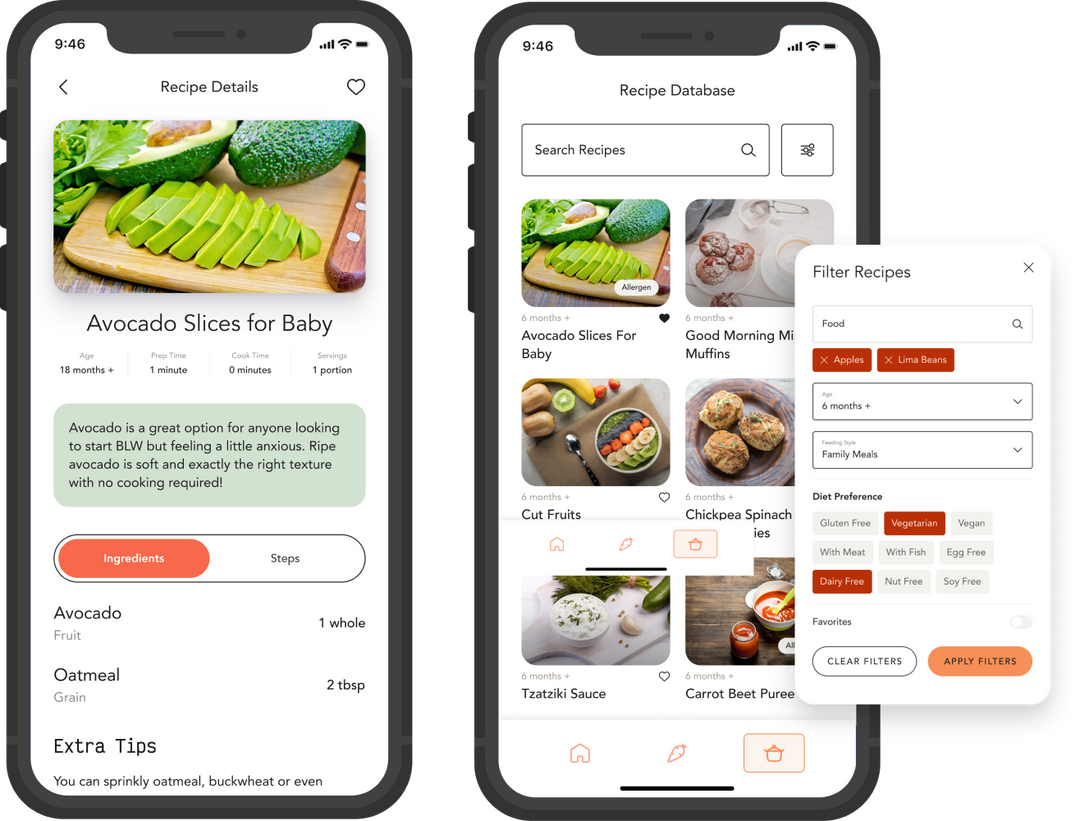
Get access to over 400 recipes tailored to your baby’s age, stage, and dietary needs - exclusively on the Bébé Foodie App.
👶 Personalized feeding plans for every stage
🥗 Recipes designed by pediatric nutritionist & chefs
📱 Track foods, log allergies, and stay organized
⏱️ Save time with quick, no-fuss meal ideas

Leave a comment