

Baby Yogurt: When to Introduce It, What to Choose, and How to Serve It
Written by Dr. Taylor Lin, MD, Board-Certified Pediatric Allergist, Immunologist and Catharine Seiler, RD, Pediatric Dietitian, both Advisors at Bébé Foodie.

If you’ve been wondering when babies can have yogurt, or not sure about what type of yogurt you can offer, you’re not overthinking it and you’re not alone! Yogurt is one food that comes with a surprising amount of questions attached. In this article, we will break down when and how to offer, best options to choose, discuss dairy-allergen introduction, and explain lactose intolerance vs milk allergy.
From a Pediatric Dietitian: Choosing and serving yogurt for your baby
From when to offer that first spoonful to which container to grab at the grocery store, here’s what to know about choosing and serving yogurt as your baby starts solids.
When can babies have yogurt?
Most babies can start enjoying plain, whole-milk yogurt around 6 months old, right around the same time solids generally begin. Both the Dietary Guidelines for Americans and the American Academy of Pediatric point to about 6 months as the starting point for foods beyond breast milk or formula.
Unlike a lot of other proteins, yogurt is a great food for new eaters. It’s soft, smooth, doesn’t require teeth or advanced chewing skills to enjoy. Whether your baby is doing purees or baby-led weaning, or a combination of both, yogurt can fit into any feeding style.
Why can babies have yogurt before cow’s milk?
Here’s where things can sometimes get confusing. General guidelines advise waiting until after 12 months to give cow’s milk. You’re likely thinking - but isn’t yogurt made with cow’s milk? It is, but the difference comes down to how the food is processed and how much of it most babies will realistically eat.
Cow’s milk, offered as a main drink, delivers a large volume of protein and minerals that a younger baby's kidneys and gut aren't quite ready to process in large amounts. It also doesn't offer iron and other nutrients infants need at this stage.
When it comes to yogurt, the culturing process breaks down some of the milk proteins, which makes them gentler on a baby's digestive system, and babies are eating it in small spoonfuls, usually not drinking cups of it.
For reference, once cow's milk is introduced regularly as a drink after the first birthday, guidance generally lands around 2 to 3 cups of whole milk a day through the toddler years.
So the rule of thumb many pediatric dietitians use: dairy as a food (yogurt, cheese, dairy mixed into a purée) can start around 6 months, while dairy as a beverage generally waits until closer to the first birthday.

What’s the best yogurt for babies?
Why whole-milk yogurt is a great option for babies
When you’re first starting out, full-fat (also referred to as whole-milk), plain yogurt is your best option. Babies' needs for growth are so high so they can use the fat and calories that full fat provides. Fat is also essential for babies' brain development.
Can babies have Greek yogurt, skyr, or kefir?
Full fat, plain Greek, skyr, or kefir yogurt are also great options that can provide a variety of consistencies.
Plain vs. flavored yogurt for babies: What to know about added sugar
There are a couple of reasons why plain instead of flavored varieties are usually recommended. Plain yogurt gives your baby a chance to taste yogurt in its simple form. You might be surprised to see how much babies grow to love the tart-flavor!
A taste of sweetened or flavored yogurt is fine occasionally. Most guidelines recommend avoiding regular intake of added sugar as this may influence taste preferences and interest in trying other foods, or can lead to cavities. It’s also best to avoid artificial sweeteners as there is limited evidence on children’s health.
Do you need to buy yogurt made specifically for babies?
You may see a few different “baby’ or “kid” specific brands of yogurt on the shelves. Many of these yogurts have added sugar (sometimes a little and sometimes a lot) so a quick nutrition label check can be helpful here.

Do babies benefit from probiotics and live cultures in yogurt?
What do “live and active cultures” in yogurt mean?
While you’re looking at that label, you may see "live and active cultures" on the container. Yogurt is made by fermenting milk with specific bacterial strains typically Lactobacillus bulgaricus and Streptococcus thermophilus, sometimes with additional probiotic strains added in. That fermentation is what gives yogurt its texture and flavor, and it's also part of what researchers believe supports a healthy gut environment.
The gut is home to trillions of bacteria, and early childhood is a particularly active window for that microbial community to take shape. Live cultures are thought to contribute beneficial bacteria to that environment and support the gut lining as it develops. This is one reason yogurt is often a favorite early food among pediatric nutrition experts, not just for its taste and texture, but for what it may be doing behind the scenes.
How to serve yogurt to your baby by age
One of the best things about yogurt is how easy it is - no need for cooking or much prep and there are many ways to incorporate it into your baby’s meals.

How to serve yogurt to a 6-month-old
Offer plain, full-fat yogurt on its own, or stir it into a fruit or vegetable purée your baby already knows. Some ideas are yogurt swirled with mashed banana, berries, or steamed pear.
Baby-led weaning with yogurt: Spoons, dipping, and self-feeding
Pre-loading a spoon and letting your baby bring it to their own mouth works well here too, if you're leaning into a baby-led approach. A thicker Greek-style yogurt can also be offered in small dollops for babies who like to self-feed with their hands.
How to serve yogurt from 9 to 12 months
Try yogurt as a dip for soft-cooked fruit spears (ripe peach, banana, or pear) or steamed veggie sticks. This is also a great age to start blending yogurt into pancakes, muffins, or oatmeal.
Easy ways to serve yogurt after 12 months
Yogurt can be a great addition to breakfast or snacks, paired with soft fruit and cereal, Another option is yogurt-based smoothies - blend with frozen fruit and a splash of milk. If you make too much, put it in some popsicle molds for a cool treat later. If you’re looking for something more savory, a very tasty pairing is Greek yogurt or labneh with zucchini pancakes or with lentils and rice.

From a Pediatric Allergist: Introducing dairy and understanding milk allergy
Because yogurt is a dairy food—and dairy is one of the most common food allergens—we asked our pediatric allergist to walk through what parents should know about introducing it.
Introducing dairy yogurt to your baby for the first time
Cow’s milk (dairy) is one of the top 9 food allergens, and it is the only allergen that is commonly introduced before infants even start solids. Most formula fed children drink cow’s milk based formula, meaning they have been ingesting and tolerating long before they are able to eat yogurt. If your child can drink a full formula feed without allergy reaction symptoms (see below), they are not allergic to dairy and you can confidently offer dairy yogurt! It is possible for children to develop food allergies over time, but it is very rare for a dairy formula-fed child to react to other forms of dairy as they grow.
Does cow’s-milk formula count as a dairy introduction?
Most formula fed children drink cow’s milk based formula, meaning they have been ingesting and tolerating long before they are able to eat yogurt. If your child can drink a full formula feed without allergy reaction symptoms (see below), they are not allergic to dairy and you can confidently offer dairy yogurt! It is possible for children to develop food allergies over time, but it is very rare for a dairy formula-fed child to react to other forms of dairy as they grow.
How to introduce yogurt as your baby’s first dairy food
That said, if you have been exclusively breastfeeding your child or avoiding dairy for other reasons (e.g. vegan households) and it’s your first time with dairy yogurt, here are some tips for introduction:
-
Take it slow
-
Offer small bite (e.g. 1/2 tsp) yogurt and watch for 5 minutes
-
If no signs of reaction, offer another 1/2 teaspoon and watch
-
If no signs of reaction, offer 2-3 tsp the following day
-
Offer 1 Tbsp on day 3 and 4
-
Then you can start eating dairy ad lib (freely!)
It’s okay if they aren’t ready to eat large volumes yet. Continue to offer yogurt a few times a week and they’ll eat more and more over time naturally.

What are the signs of a dairy allergy in babies?
The hallmark of an allergic reaction is rapid onset of symptoms; your infant is happily feeding one moment and the next minute things have changed - maybe a rash, irritability, coughing, vomiting, or scratching. Reactions most commonly occur within minutes of eating, but can occur up to 2-4 hours later.
An allergic reaction may only present as a rash, other times many symptoms occur at once.
What can an allergic reaction to dairy look like in a baby?
Signs of an allergic reaction you should look for include:
-
Skin: hives (raised welts), swelling, redness
-
Gastrointestinal: vomiting, diarrhea, abdominal pain, irritability, gagging
-
Respiratory: coughing, wheezing, noisy breathing
-
Cardiovascular: pale appearance, tired, not responding
When is an allergic reaction an emergency?
Anaphylaxis is a severe, life-threatening reaction involving multiple body systems and requires immediate treatment. Call 911 immediately if you think your child is having a severe allergic reaction.
Check out our blog post for more detailed information on identifying allergic reactions.
Milk allergy vs. lactose intolerance in babies: What’s the difference?
As an allergist, I try to avoid the term “milk allergy” because it can mean several different things. When someone says their child has a milk allergy, they may have an IgE-mediated allergy, food protein induced enterocolitis syndrome (FPIES), food protein induced enterocolitis syndrome (FPIAP), or lactose intolerance. Clear as mud? Let’s break it down.
-
IgE-mediated milk allergy - milk ingestion, may cause hives, vomiting, low blood pressure; can be life threatening
-
FPIES - milk ingestion causes severe repetitive vomiting, diarrhea, lethargy, can be life threatening
-
FPIAP - milk ingestion causes blood and mucus in infant’s stool, not life threatening
-
Lactose intolerance - lactose-containing milk products cause bloating, abdominal pain, diarrhea, not life threatening
What is an IgE-mediated milk allergy?
An IgE-mediated food allergy to milk is very serious, can be severe and life threatening. Reactions are immediate and require an emergent response. Treatment for reactions is antihistamines and epinephrine, prevention is strict avoidance of all dairy containing products.
What is lactose intolerance in babies?
Lactose intolerance, albeit bothersome, is not a life threatening disorder. Lactose is a naturally occurring sugar in milk products. Many people have low amounts of lactase, the enzyme needed to digest lactose sugar. Undigested lactose is consumed by gut bacteria and leads to gas production. This is what causes the bloating, abdominal pain, and diarrhea seen in this condition. Treatment is supportive. Prevention is avoidance of lactose-containing dairy products (lactose-free products are tolerated!) or taking a lactase supplement before ingesting dairy.

Baby yogurt can be a simple addition to starting solids
Yogurt can be one of those wonderfully easy foods to keep in your starting-solids rotation. Around 6 months, most babies can begin enjoying plain, full-fat yogurt, whether you’re offering purées, following a baby-led approach, or doing a little of both.
Start simply and let it evolve with your baby. Yogurt might begin as a few spoonfuls on its own, then become a dip for soft finger foods, an ingredient in pancakes or oatmeal, or an easy addition to breakfast and snacks. There’s no need for a special “baby” yogurt—choosing a plain, full-fat option with little or no added sugar is a great place to start.
And because dairy is a common food allergen, knowing what an allergic reaction can look like can help you feel more confident when offering it for the first time. As with so much of starting solids, your baby may love yogurt immediately, need a few tries, or mostly use it as finger paint at first. All of that can be part of learning to eat.
Written by Dr. Taylor Lin
Pediatric Allergist & Advisor at Bébé Foodie
Meet Dr. Taylor Lin, our go-to expert on allergies and immunology! Dr. Lin serves families in southeast Michigan as an allergy and immunology physician with Allergy & Immunology Associates. With top-notch training from the University of Michigan and a specialty fellowship in pediatric food allergy, she’s not just highly qualified—she’s also a mom to a child with food allergies herself! Dr. Lin directs her clinic's food oral immunotherapy program and brings evidence-based, accessible advice to families through her role with Bébé Foodie.

Written by Catharine Seiler RD
Pediatric Dietitian & Advisor at Bébé Foodie
Catharine Seiler is a pediatric dietitian with over 14 years of experience in both clinical and outpatient settings. She’s worked at Boston Children’s Hospital and now supports families daily at Lexington Pediatrics. At Bébé Foodie, Catharine lends her expertise to help parents feel confident about nutrition, from growth concerns to picky eating and food allergies. As a mom of two, she brings both professional insight and a real-life understanding of what feeding kids actually looks like.
This blog post is for information purposes only and shouldn’t be used as personal, health, nutritional, or medical advice. Always consult with your pediatrician before making any decisions about your child's health or readiness for various foods.
Popular Posts



Share this
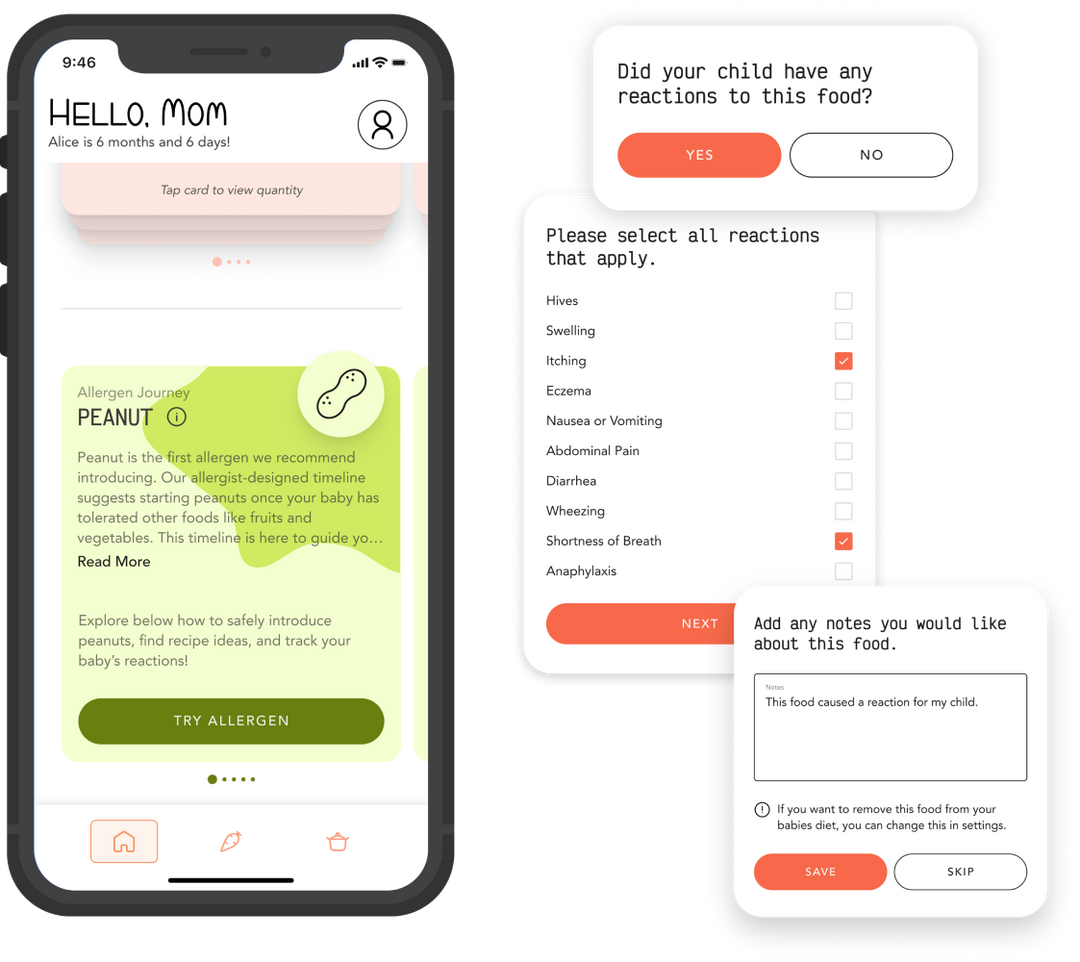
Want extra support when introducing allergens?
Allergen guidance created by a pediatric allergist at your fingertips in the Bébé Foodie App.
🥜 Top allergens explained clearly
⏱ Timing guidance for allergen introduction
✔️ Easy tracking for allergens tried
⚠️ Track symptoms and make notes
Leave a comment